

No-drill cavity prevention
Curodont Repair treats decay while it is still reversible
A cavity cannot be reversed once it forms, but the decay that leads to one often can be, provided it is caught while still confined to the enamel. That window closes the moment decay reaches the dentin beneath. Past that point, the structure is too compromised to repair itself, and a filling becomes the only option.
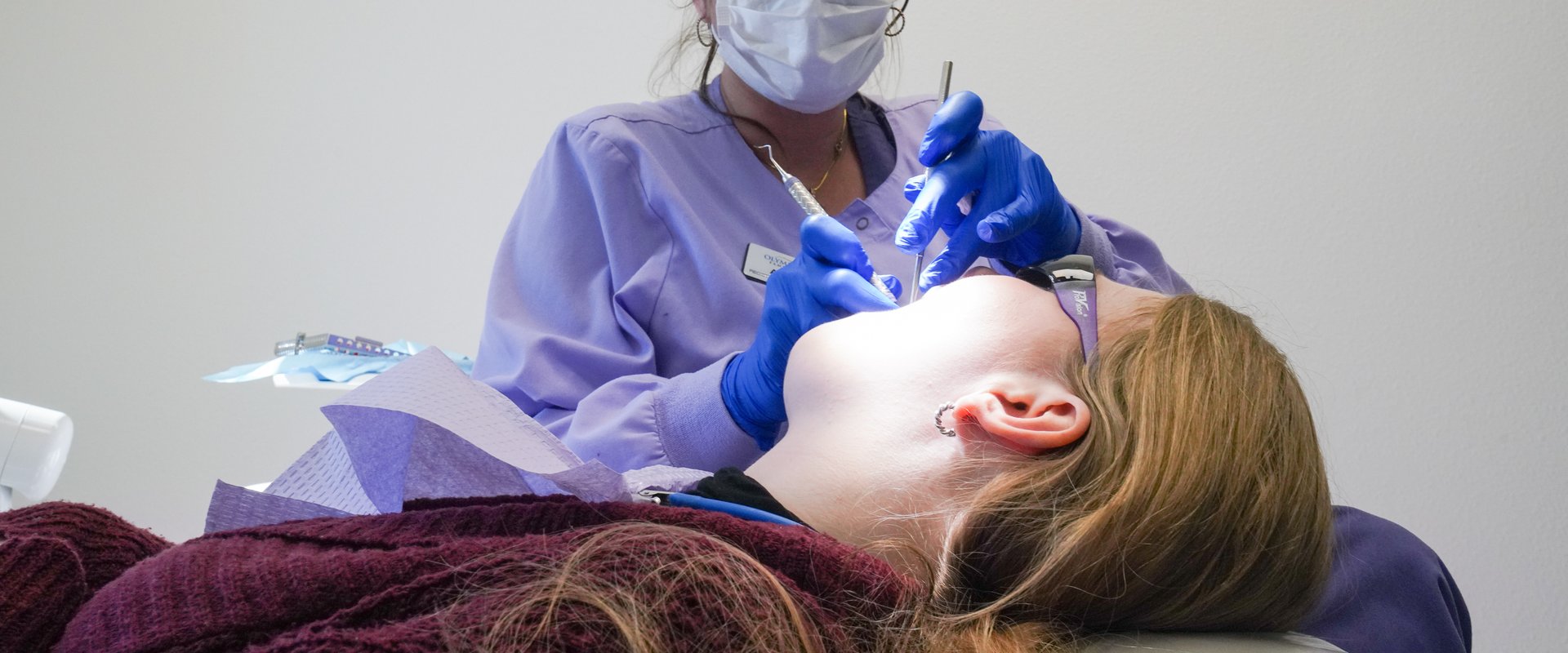
At Olympia Hills Family Dental, we treat that earlier stage with Curodont Repair, a peptide-based treatment that rebuilds weakened enamel without a drill, a needle, or an injection. The application takes about five minutes per spot and fits into a routine hygiene visit.
How it works
Curodont helps your enamel rebuild itself from within
The treatment works very differently from a traditional filling. Instead of removing decayed tooth structure, it works with the tooth to repair the weak spot.
01
The peptide soaks in
A peptide gel soaks into the earliest stage of a cavity, right where the enamel has started to weaken.
02
It acts as a scaffold
The peptide forms a framework inside the weakened area, drawing the tooth’s own minerals back into it.
03
The enamel rebuilds
The spot remineralizes from within. There is no drilling, no numbing, and no injections at any point in the visit.
Because the process does not require cutting into the tooth, our hygienists can administer it during a regular hygiene visit, so most patients can address an area of early decay without scheduling a separate restorative appointment. Curodont is still relatively new to dental offices in the United States, which is part of why so few patients have heard of it before we bring it up.
~90%
of adults ages 20 to 64 have had decay in their permanent teeth
1 in 5
adults in that age range have untreated decay
Those numbers reflect exactly the gap this treatment is built to close: catching decay while it is still reversible, instead of waiting until a filling is the only option left.
Source: National Institute of Dental and Craniofacial Research
Is it right for you?
Curodont works on early decay, not on cavities that need a filling
It stops early decay from progressing and helps remineralize the weakened enamel in that spot. Where it excels is the in-between stage, when your dentist can see decay starting on an X-ray or exam but the tooth does not need to be drilled yet.
A good fit
- Early decay we can see on an exam or X-ray that is still in the enamel
- A spot your dentist has been watching at past visits
- Patients prone to new areas of decay, alongside fluoride treatments
Not a fit
- Decay that has already broken through the enamel into a true cavity
- Decay that has reached the dentin beneath the enamel
- Any tooth that needs a dental filling, which Curodont does not replace
Your visit
A Curodont visit takes a few minutes and fits into your cleaning
1
Exam
We find the early spot
We identify the early area of decay during a routine exam or with dental X-rays.
2
Prep
We clean and isolate
We clean and isolate the affected tooth surface.
3
Apply
The gel goes on
The peptide gel is applied directly to the weakened enamel.
4
Done
Rinse and go
The area is rinsed and the visit is complete, usually within a few minutes.
Curodont vs. a filling
Curodont keeps your natural tooth structure; a filling replaces it
| Curodont Repair | Dental filling | |
|---|---|---|
| Stage of decay | Early decay still in the enamel | A cavity that has broken through the enamel |
| Drilling | None | Decayed tooth structure is removed |
| Needles or numbing | None | Your dentist will explain at your visit |
| Time | About 5 minutes per spot | A restorative appointment |
| When it is done | Usually during your hygiene visit | Usually a separate visit |
Before your visit
Curodont is not covered by dental insurance yet
Cost and insurance
This treatment is not currently covered by dental insurance, as it is still considered a newer, elective option in the U.S. rather than a standard covered procedure. It is billed as an out-of-pocket service, and our team will go over the fee with you before treatment.
See your payment plan options.
Why patients say yes
The alternative is waiting and hoping the area does not progress into a full cavity. For most people, that is a much harder trade-off than a few minutes of no-drill treatment during a cleaning they already have scheduled.
Meet our dentists
Our dentists believe in treating problems earlier
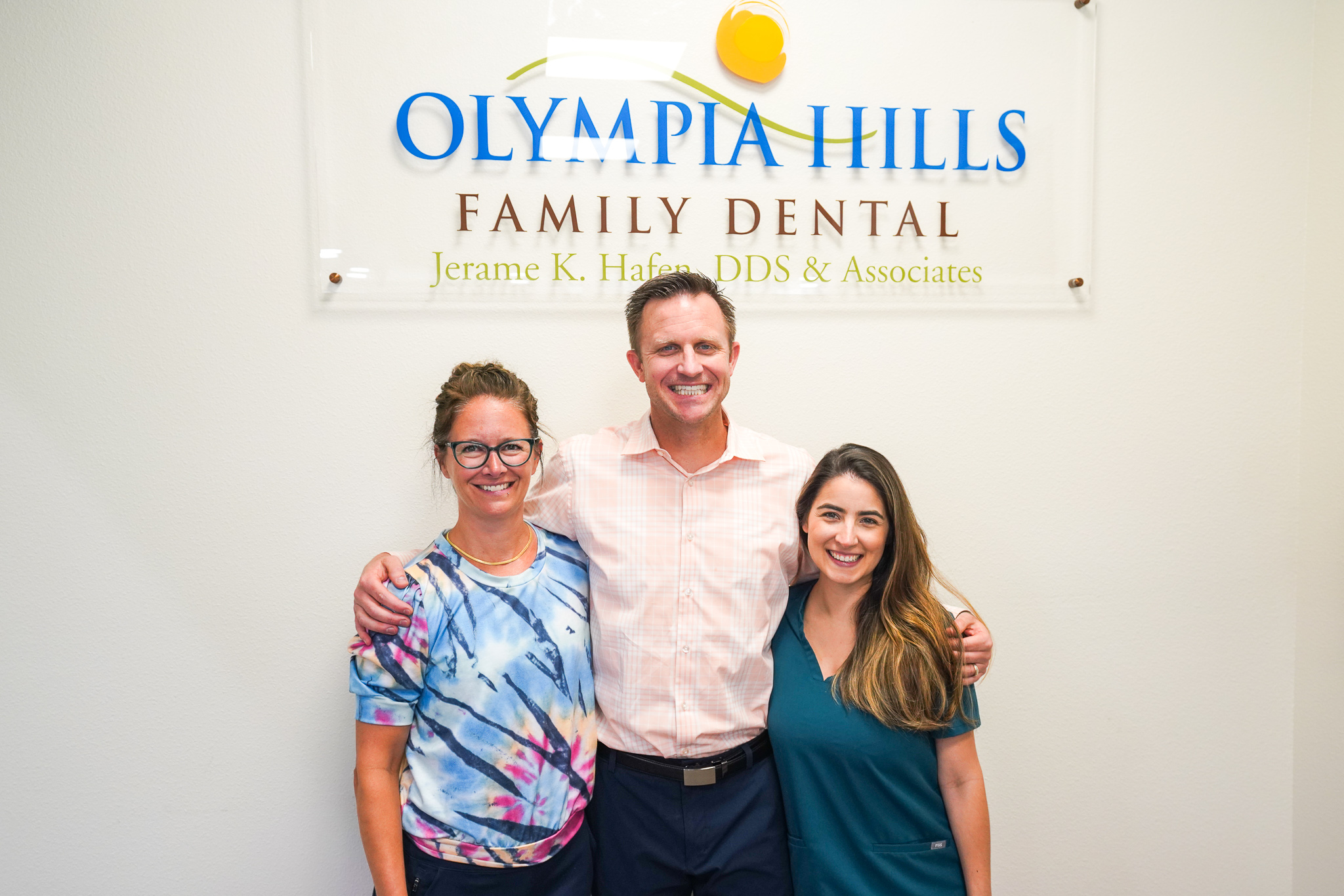
Dr. Hafen, Dr. Gonzalez, Dr. Greene, and the rest of our team believe strongly in giving patients options earlier, before a small problem becomes a bigger one, and this treatment is a direct reflection of that approach.
Dr. Jerame Hafen, DDSOwner. DDS, New York University College of Dentistry, 2009.
Dr. Christina Gonzalez, DDSWith the practice since 2015. Doctorate from UT Health San Antonio.
Dr. Erin Greene, DDSUT Health San Antonio, 2011. General Practice Residency, University of Utah.
FAQ
Curodont Repair questions
Here are some of the most frequently asked questions we get about Curodont Repair.
Can you actually reverse a cavity?
In the earliest stage, before decay has broken through the enamel, Curodont can stop that decay and help the enamel remineralize. Once a true cavity has formed, a filling is still the appropriate treatment.
Is Curodont painful?
No. There is no drilling, no numbing, and no injections. Most patients describe it as feeling similar to a routine cleaning step.
How long does Curodont take?
About five minutes per spot treated, which is why it can usually be done during a hygiene appointment rather than a separate visit.
Will my insurance cover it?
Not currently. Because it is a newer treatment option in the U.S., it is billed as an out-of-pocket service.
Does Curodont mean I will never need a filling?
No. Curodont treats early decay in the specific spot where it is applied. It does not replace a filling once decay has broken through the enamel, and it does not prevent new decay elsewhere, so regular cleanings and exams still matter.
Why haven’t I heard of Curodont before?
Curodont is still relatively new to dental offices in the United States, so many patients first hear about it when we recommend it at a hygiene visit.
Related care
More ways we prevent and treat decay
Fluoride Treatments
Strengthen enamel for patients prone to new decay.
Dental Sealants
Protect deep grooves on back teeth.
Dental X-Rays
How we spot decay before you can feel it.
Dental Fillings
When decay has become a true cavity.
From our blog
Can you reverse a cavity before it needs a filling?
Why enamel damage can often be stopped before it becomes a cavity.
Is there a cavity treatment without drilling or numbing?
How silver diamine fluoride skips the drill and the numbing shot.
Now accepting new patients
Ready for a no-drill approach?
If you have noticed a spot your dentist has been watching, or you simply want an exam to see whether you are a candidate for this kind of early intervention, our team would be glad to talk you through it.
Office: 8056 Shin Oak Dr, Suite 100, Live Oak, TX
Mon, Tue, Thu: 7:00 AM to 5:00 PM
Wed: 8:00 AM to 5:00 PM
Fri: 8:00 AM to 3:00 PM
Request a Service Appointment
"*" indicates required fields