One treatment, called silver diamine fluoride, skips both the drill and the numbing shot entirely. It is a liquid brushed directly onto the tooth, and within seconds it hardens the decayed area and cuts off the bacteria fueling it, all without ever touching a drill to enamel. It will not work on every cavity, and it cannot undo damage that has already set in, but for the right case, it is a genuine way to avoid the two things people dread most about a dental visit.
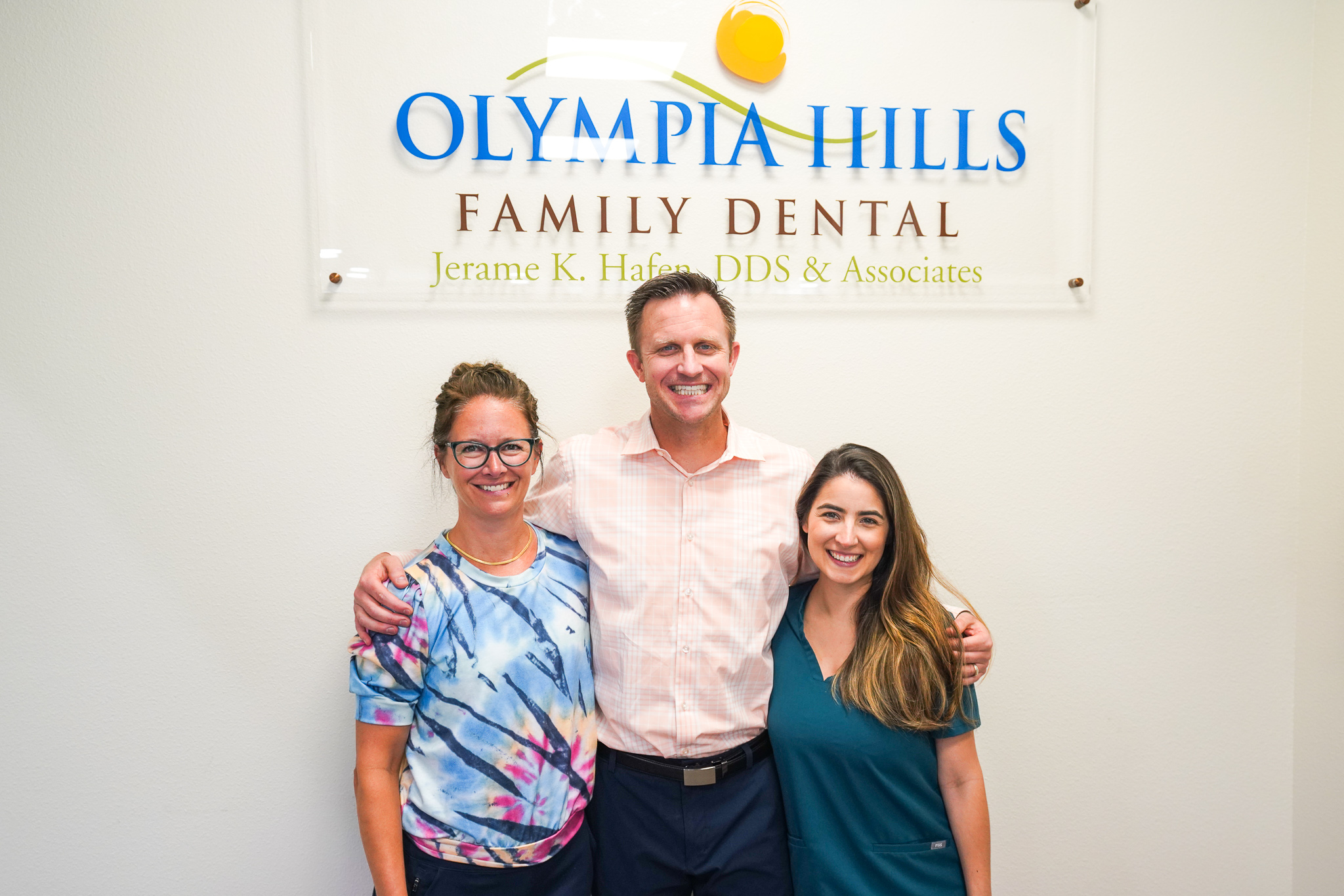
At Olympia Hills Family Dental, plenty of patients have put off a checkup for exactly that reason, letting a small problem sit until it turned into a painful one. Dr. Hafen and our team would rather you know the honest range of options up front, including which ones skip the drill entirely, so fear is never the reason you go without care.
The No-Drill Option: Silver Diamine Fluoride
For patients who feel anxious about the drill, silver diamine fluoride (SDF) offers a different path forward. A dentist paints the liquid directly onto the decayed area with a small applicator, and within seconds it hardens the spot and stops the bacteria causing the damage. A Phase III clinical trial studied exactly this effect, confirming that the treatment can arrest a cavity without cutting into the tooth at all.
This approach isn’t limited to one type of patient. Young children who cannot yet sit through a longer procedure are common candidates, but SDF is also a valuable option for elderly patients managing health complications, as well as those living with Alzheimer’s or other forms of dementia, where a traditional drill-and-fill procedure can be difficult to tolerate or coordinate. For anyone who struggles with lengthy dental work, SDF offers a way to stop decay in its tracks quickly and with minimal discomfort.
There is a tradeoff. The treated area turns a permanent dark gray or black, which is one reason this option gets used more on back teeth than front ones. But for many patients, that stain is an easy price to pay for arresting decay without more invasive treatment. A similar, gentler version of this idea shows up in preventative dentistry visits too, where fluoride varnish can catch a spot before it turns into a real cavity in the first place. Timing decides everything else about this treatment, which is worth walking through in more detail.
When It Works, and When It Does Not
The honest answer is that this only works on decay that has not gone very deep. Once a cavity has eaten through the enamel and into the dentin below it, the liquid cannot undo that damage, and it is not going to stop pain that starts creeping toward the nerve. At that point, we are talking about a filling or, in more advanced cases, treatment aimed at saving the tooth altogether. Knowing the difference before that pain starts is exactly why we recommend regular checkups even when nothing seems wrong.
Location matters too. A cavity sitting on a flat, easy-to-reach surface is a much better candidate than one hiding between teeth or tucked below the gumline, where the applicator simply cannot do its job well. And if a tooth already has a cracked or failing filling, the problem is structural, not something a surface treatment can fix. A patient’s age and comfort level factor in as well, because children and anyone with significant dental anxiety are often the people who benefit most from avoiding a drill in the first place.
This is really why an exam matters more than guesswork. X-rays show what a mirror at home never will, including exactly how deep a cavity has gone and whether it is still shallow enough for a no-drill approach to succeed. We look at the whole picture before recommending anything, because pretending every small spot on a tooth qualifies for this treatment would do you a disservice. That same honesty carries into every conversation we have about your care, long after the exam chair, and it is part of what makes appointments here feel less like a guessing game and more like a plan you actually understand.
Getting Past the Fear at Olympia Hills Family Dental
If you have been putting off a visit because of dental anxiety, you are far from alone, and there is nothing wrong with you for feeling that way. It is one of the most common reasons people delay care, right up until a small problem turns into a bigger, more painful one. We built our approach to appointments around that reality, walking through every step before we start so nothing catches you off guard, and choosing the least invasive option whenever one genuinely fits.
We work with patients across Live Oak, Selma, Cibolo, Schertz, and Converse, and part of our job is making sure you understand every option before we touch a single tooth. If silver diamine fluoride is the right call for your cavity, we will tell you that, and if it is not, we will walk you through exactly why a filling or another approach is the better path and what to expect from it. Schedule an appointment with Dr. Hafen and our team, or reach out through our contact page if you have questions before booking.