
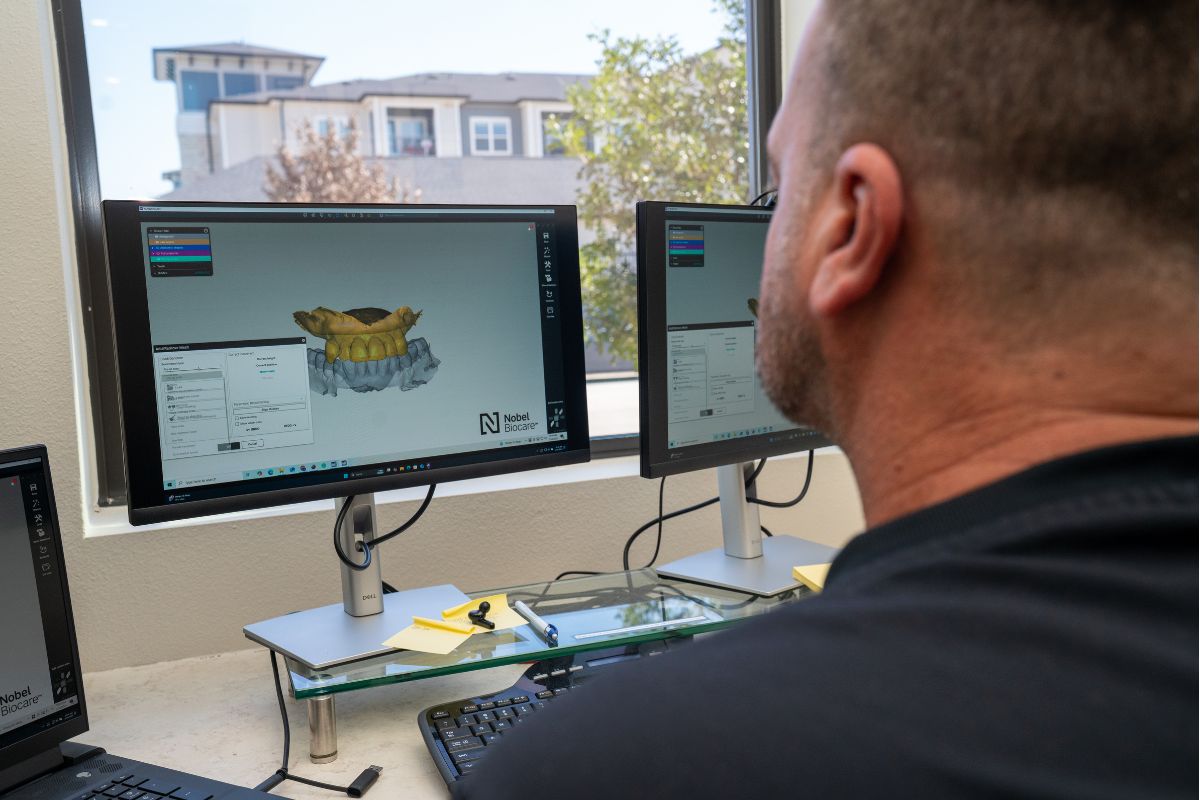
 A custom nightguard stops bruxism damage by putting a durable layer between your upper and lower teeth, so the force and friction of nighttime grinding land on the guard instead of your enamel, fillings, and crowns. What it does not do is stop the grinding itself. Knowing that difference helps you set realistic expectations and get the most out of the appliance.
Olympia Hills Family Dental creates personalized nightguards that fit comfortably over your teeth and let your jaw move naturally during sleep. This post looks at what happens to teeth during sleep bruxism, how a guard protects them, what current research says a guard can and cannot do, and how our team pairs the appliance with attention to the habits and sleep issues that often drive grinding. If jaw pain is your main concern, our page on nightguards and TMJ care covers that side in more depth.
What Happens to Your Teeth During Sleep Bruxism
Sleep bruxism is repetitive clenching or grinding that happens without your awareness while you sleep. It is common. A 2024 systematic review and meta-analysis in the Journal of Clinical Medicine estimated that roughly 21% of people worldwide experience sleep bruxism, with estimates varying widely depending on how it was measured and who was studied.
During an episode, the jaw muscles can load the teeth for longer stretches, and in different directions, than ordinary chewing does. Over months and years, that repeated contact can flatten chewing surfaces, chip edges, create small cracks, and loosen or fracture fillings and crowns. Enamel does not grow back once it is worn away, so damage tends to add up quietly.
Most people find out they grind because a sleep partner hears it or because a dentist spots wear during a routine exam. Common clues include morning jaw soreness, dull headaches on waking, and new tooth sensitivity. You can read more about how grinding is linked to morning headaches and how worn teeth can change the look of your smile.
How a Custom Nightguard Protects Your Teeth
A professionally made nightguard is a thin, rigid or semi-rigid appliance, usually made of plastic or acrylic, that covers the biting surfaces of one arch. It is shaped from an impression of your teeth, so it seats firmly and stays in place through the night.
The guard protects you in a few practical ways. It becomes the surface that wears, so scratches and grooves show up on the appliance rather than on your enamel. It spreads contact across the whole arch instead of concentrating it on a few teeth. It also shields restorations that are expensive to replace, such as crowns, veneers, bridges, and large fillings.
Because the guard is custom fitted, our team can adjust how your teeth meet against it so contact feels even and comfortable. A guard that fits well is also one you are more likely to wear every night, which matters, because protection only happens while it is in your mouth. If you are weighing a pharmacy guard instead, our post on custom nightguards versus store-bought options walks through the trade-offs.
What the Research Says a Nightguard Can and Cannot Do
It is easy to find claims that a nightguard cures grinding, fixes the jaw joint, or guarantees better sleep. The evidence is more modest, and we think you deserve the accurate version.
Protection Is Well Supported, a Cure Is Not
A Cochrane systematic review of occlusal splints for sleep bruxism found insufficient evidence that splints reduce sleep bruxism itself, while noting they may help limit tooth wear. In other words, many people keep grinding while wearing a guard. The guard simply takes the damage. The American Dental Association describes a night guard the same way, as a way to protect your teeth while you sleep, ideally alongside steps that address the cause.
Jaw Pain and TMD Call for a Conservative Approach
Grinding and temporomandibular disorders (TMD) often show up together, but they are not the same thing. The National Institute of Dental and Craniofacial Research explains that bite guards protect teeth and may help with clenching, but that evidence that they relieve TMD pain is limited. NIDCR also notes that many TMDs improve on their own and advises against irreversible treatments that permanently change the bite, such as grinding down teeth, placing crowns, or orthodontics, for TMD alone.
That is one reason a nightguard is a sensible first step for many patients: it is reversible and does not alter your teeth. A properly made guard should not shift your bite. If it ever causes new pain or your bite feels different in the morning, stop wearing it and let us check it.
Addressing What Drives the Grinding
Because a guard protects teeth without switching off the grinding, it works best as part of a broader plan. The ADA links bruxism to stress, sleep disorders, and use of tobacco, alcohol, and caffeine, and it notes that stress management works well when paired with a night guard. Depending on what we find during your visit, that plan may include:
- Stress and habit awareness: relaxation techniques, exercise, and noticing daytime clenching so you can release your jaw.
- Evening habit changes: cutting back on caffeine, alcohol, and tobacco, especially later in the day.
- Sleep screening: a conversation about snoring, daytime fatigue, or gasping at night, and a referral for a sleep study when those signs are present.
- Medication review: asking your physician whether any of your prescriptions could be playing a role.
Sleep and grinding are closely connected, which is why we take snoring and tiredness seriously. Our post on the connection between sleep apnea and TMJ disorders explains that overlap, and Dr. Christina Gonzalez has training in sleep breathing disorders and dental sleep solutions.
Long-Term Value and Cost Considerations
Protecting teeth from grinding can help you avoid more involved care later, including crown replacement, root canal therapy when a cracked tooth reaches the nerve, and treatment of TMJ disorders when jaw symptoms build. Combined with regular checkups, a guard is part of a preventive approach that tends to cost less, and feel better, than repairing damage after the fact. For a closer look at the dollars involved, see our post on how nightguards protect your dental investment.
A custom guard often lasts several years with good care, though heavy grinders wear through appliances faster. How long yours lasts depends on how hard you grind, the material, and how well the guard is cleaned and stored.
Getting Started With a Custom Nightguard
The process begins with an exam. We look for wear patterns, chipped or cracked teeth, and strain on existing restorations, and we ask about jaw soreness, headaches, and sleep. That conversation helps us decide whether a nightguard is the right tool, and whether anything else needs attention first.
Next, we take impressions of your teeth so a dental laboratory can fabricate an appliance that matches your bite. At the fitting visit, we check how the guard seats, adjust any high spots, and show you how to put it in, take it out, and care for it. Most people get used to wearing a guard within a few nights.
Signs Your Nightguard Needs Attention
Bring your guard to your regular cleanings so we can check it. Let us know sooner if it cracks, develops holes from grinding, feels loose or tight, or leaves your teeth or jaw sore. Rinse it with cool water, brush it gently, keep it in its case, and avoid hot water, which can warp the material and change the fit.
Experience Professional Bruxism Protection at Olympia Hills Family Dental
Our experienced team, including Dr. Jerame Hafen, DDS, Dr. Christina Gonzalez, DDS, and Dr. Erin Greene, DDS, provides custom nightguards along with the exam and follow-up that make them work. We focus on protecting your teeth and restorations, keeping treatment reversible and conservative, and looking for the habits or sleep issues that may be behind your grinding.
If you wake up sore, have noticed chips or flattened teeth, or have been told you grind at night, a short visit can show you where things stand and whether a guard makes sense for you. Contact us to schedule your bruxism consultation.
Frequently Asked Questions About Custom Nightguards for Bruxism
Will a nightguard stop me from grinding my teeth?
Usually not. Research has not shown that splints reliably reduce sleep bruxism itself. A nightguard protects your teeth and dental work from the grinding that still happens. Managing stress, cutting back on caffeine, alcohol, and tobacco, and checking for sleep problems can help address what drives it.
How do I know if I grind my teeth at night?
Common signs may include morning jaw soreness, dull headaches on waking, tooth sensitivity, or a partner noticing grinding sounds. A dental exam can also reveal flattened or chipped teeth and other wear patterns that point to grinding.
How long does a custom nightguard last?
With proper care, a custom nightguard can last several years. Its lifespan depends on how hard you grind, the material, and how well the appliance is cleaned and stored. Bringing it to checkups lets us spot wear before it stops protecting you.
How do I clean my nightguard?
Rinse it with cool water after each use and clean it gently with a soft brush. Avoid hot water, which can warp the material. Storing it in its case when not in use helps keep it protected and hygienic.
Is a custom nightguard uncomfortable to wear?
Most people adjust within a few nights. Because a custom guard is made from impressions of your teeth and adjusted at your fitting, it tends to fit more securely and comfortably than a generic option.
Can a nightguard help with jaw pain?
It may help by easing clenching pressure during sleep, but evidence that guards relieve TMD pain is limited, and many jaw problems improve on their own. If jaw pain continues or a guard makes it worse, we can evaluate other conservative options.
Reviewed by
The Olympia Hills Family Dental Team
Olympia Hills Family Dental
