
 Sleep apnea and TMJ disorders frequently occur together, and the link between them is well-established in dental research. If you deal with jaw pain, morning headaches, or disrupted sleep, both conditions are worth evaluating at the same appointment.
At Olympia Hills Family Dental, we take jaw health seriously because its effects reach further than most patients expect. Dr. Hafen addresses TMJ-related pain and bite dysfunction, and Dr. Christina Gonzalez brings focused training in sleep breathing disorders to the same practice. Having both areas of care under one roof means patients get a fuller picture of what is actually driving their symptoms.
How Sleep Apnea and TMJ Are Connected
Sleep apnea causes repeated breathing interruptions during sleep. Each time breathing stops, the body partially wakes to restore airflow. Those arousals trigger muscle activity throughout the jaw, which is where the TMJ connection begins. Research published in the National Library of Medicine found a significant association between obstructive sleep apnea and temporomandibular joint disorders, noting patients with TMD presented measurably higher rates of sleep apnea than those without it.
The jaw responds to disrupted breathing by tensing and repositioning during sleep. Over time, that repeated muscle activity strains the temporomandibular joint, the hinge connecting your jaw to your skull. The result is inflammation, soreness, and in more severe cases, joint dysfunction that affects how you open and close your mouth during the day.
The Role of Bruxism as a Middle Link
Teeth grinding, known as bruxism, sits between sleep apnea and TMJ disorders as a connecting factor. When the airway is partially obstructed during sleep, the jaw often clenches or grinds as the body works to reopen it. That grinding places enormous pressure on the jaw joint night after night.
Patients with sleep apnea who also grind their teeth face a compounded risk of TMJ damage. The joint absorbs force it is not designed to handle repeatedly, which accelerates wear and inflammation. Many patients dealing with chronic jaw pain are surprised to learn their sleep quality is a contributing factor, not just stress or bite alignment. Addressing all three conditions together leads to better outcomes than treating each one separately.
Symptoms That Point to Both Conditions
Knowing which symptoms overlap helps you have a more informed conversation with your dentist. Several signs point to both sleep apnea and TMJ involvement at the same time.
Here are the symptoms that frequently appear in patients dealing with both conditions:
- Morning jaw soreness: waking with a stiff or aching jaw is a strong indicator of nighttime grinding connected to disrupted sleep
- Headaches upon waking: tension across the temples and behind the eyes is common when jaw muscles are overworked through the night
- Clicking or popping in the jaw: joint sounds during opening or closing reflect stress on the TMJ disc
- Daytime fatigue: poor sleep quality from breathing interruptions compounds the physical effects of jaw strain
- Ear pain or fullness: the TMJ sits close to the ear canal, so joint inflammation is felt in that area
If you recognize these symptoms, a dental evaluation is a strong starting point since the jaw is central to both conditions.
What Treatment Looks Like
At Olympia Hills Family Dental, TMJ treatment does not involve laser therapy. Instead, Dr. Hafen focuses on oral appliances, nightguards, and bite evaluation to reduce the strain on the joint and protect teeth from grinding damage. A custom-fitted nightguard absorbs and redistributes grinding forces so the joint is not bearing the full load each night.
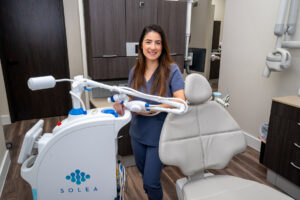
For patients whose symptoms point toward a sleep breathing disorder, Dr. Christina Gonzalez has undergone extensive training to evaluate and treat sleep breathing disorders safely and correctly. Our office uses the state-of-the-art Solea CO2 Laser for sleep breathing treatment, known for its superior quality outcomes. Addressing the breathing component reduces the jaw muscle activity that drives grinding, which in turn reduces the stress on the TMJ. We also use our advanced dental technology to get a clear picture of your bite, jaw position, and joint function before recommending any treatment.
Schedule an Evaluation at Olympia Hills Family Dental
Jaw pain, grinding, and poor sleep are not problems you have to manage separately or accept as normal. At Olympia Hills Family Dental, our dentists look at the full picture, connecting the dots between your sleep quality, bite, and joint health to build a treatment plan that addresses what is actually driving your symptoms. Dr. Hafen and Dr. Gonzalez each bring focused training to their respective areas of care, and our team coordinates that care so nothing falls through the cracks.
If you are ready to get to the bottom of your jaw pain or disrupted sleep, reach out through our contact form to schedule your evaluation with our team today.