
 The tongue’s position during sleep directly controls airflow through the airway. When the muscles of the mouth and throat relax at night, the tongue falls back toward the throat. In an airway with limited space, that shift forces air through a smaller passage at higher speed, and the surrounding soft tissue vibrates. That vibration is snoring, and tongue position is one of the most common contributors.
At Olympia Hills Family Dental, Dr. Christina Gonzalez has undergone extensive training to treat your sleep breathing disorder safely and correctly. Our office uses the state-of-the-art Solea CO2 Laser, known for its superior quality of treatment of sleep breathing disorders. If snoring or disrupted breathing has been a concern, our snoring laser treatment targets the soft tissue that makes airway restriction worse during sleep.
How the Tongue Shapes the Airway
Your tongue is the largest muscle in your mouth, and it plays a bigger role in your breathing than most people realize. During waking hours, the muscles holding it in position stay active and toned. During sleep, that muscle tone decreases across the mouth and throat. In a well-developed airway with adequate space, the tongue’s shift backward is minor, and breathing continues uninterrupted. In a narrower airway, the tongue crowds the passage, and the body pushes air through under greater pressure.
MedlinePlus identifies tongue anatomy and its position relative to the airway as a recognized factor in sleep-disordered breathing in adults. Sleeping on the back worsens the problem because gravity pulls the tongue further toward the throat, which is why snoring is often loudest in that position. Sleeping on your side helps keep your tongue from falling back, but it doesn’t fix the loose tissue in your throat and palate that develops over time.
Signs Worth Paying Attention To
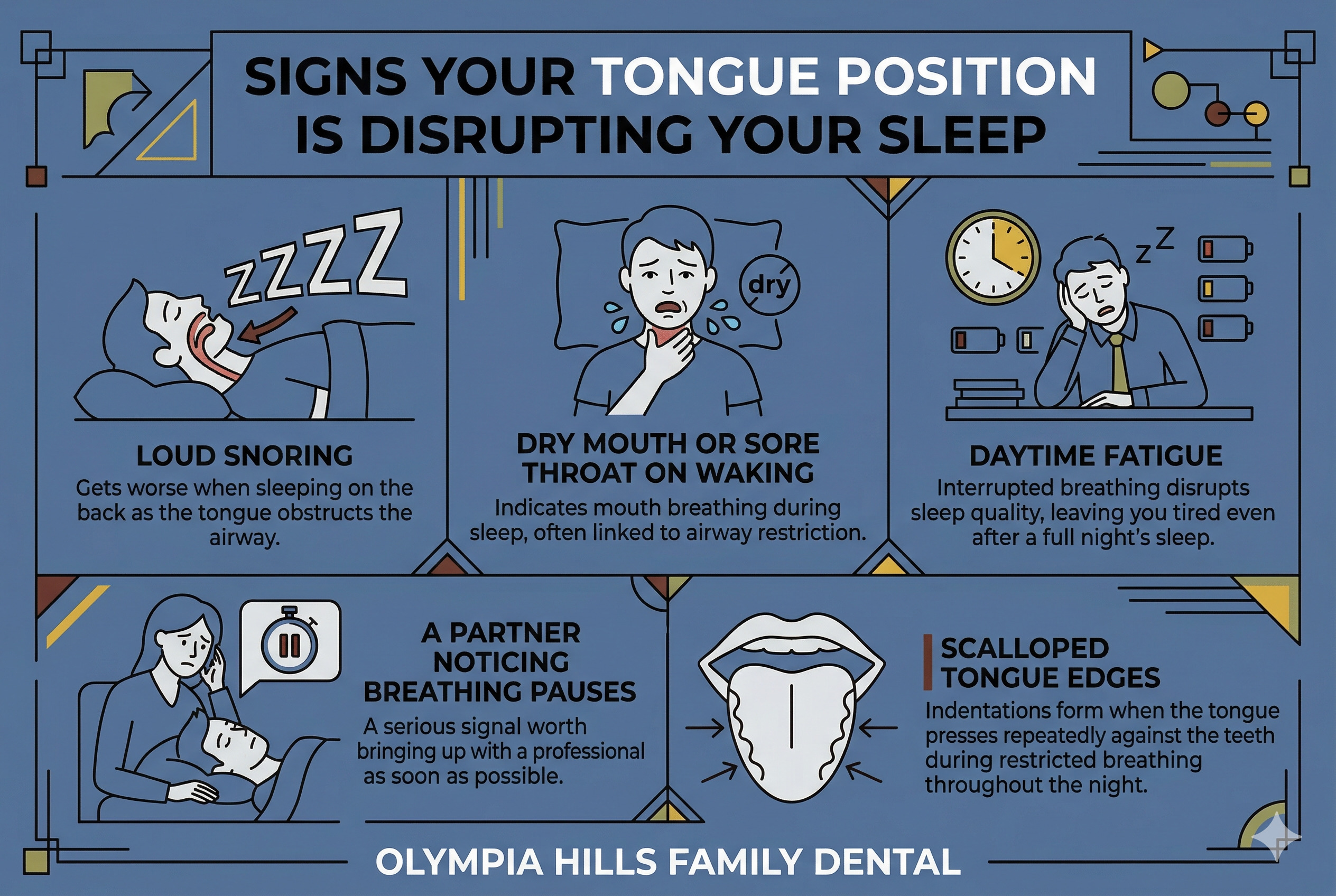
Many people with tongue-related airway issues don’t realize it. They often think their poor sleep is normal or blame it on something else. Here are a few signs worth paying attention to:
- Snoring that gets worse on your back: This can mean your tongue is falling back and partially blocking your airway while you sleep.
- Dry mouth or a sore throat when you wake up: This usually means you were breathing through your mouth at night because it was harder to breathe through your nose.
- Feeling tired even after a full night in bed: Your sleep may be getting interrupted, even if you don’t remember waking up.
- Teeth marks along the sides of your tongue: This can happen when your tongue presses against your teeth during the night, often due to restricted breathing.
- A partner reporting pauses in your breathing: If a partner notices pauses in your breathing while you sleep, it’s an important sign and should be evaluated.
While each of these signs on its own may not seem like a problem, when they happen together, it’s worth a closer look with our team.
Laser Treatment for Snoring: How the Solea Laser Works
The Solea CO2 Laser applies energy beneath the surface of the palate and throat tissue, stimulates collagen, and firms the tissue on the roof of the mouth. Tissue that holds its shape during sleep is less susceptible to collapse when the tongue shifts back overnight. The entire procedure requires no incisions of any kind, allowing you to return to your daily life without restrictions.
Dr. Gonzalez creates every treatment plan on a full evaluation of each patient’s anatomy and sleep history before any recommendations are made. Our page on how laser treatment for snoring works covers the clinical details behind the Solea CO2 Laser for patients who want to go deeper before their visit. We also treat airway health as part of preventative dentistry care, because what happens in the mouth during sleep is directly connected to overall wellness.
Why Sleep Symptoms in Women are Often Missed
When women report exhaustion, difficulty concentrating, or waking up unrested, the conversation often turns to stress or a demanding schedule rather than sleep breathing disorders. That gap in evaluation means many women go years without addressing a breathing disorder that is decreasing their quality of life and health.
As hormone levels shift with age, the muscle tone supporting the throat diminishes, and airway restriction during sleep grows more pronounced. The result is fatigue that looks like burnout when the source is actually loss of tone in the mouth and throat. If your sleep has felt consistently off and you have not been able to explain why, this is a practical place to start.
Your Sleep Deserves a Closer Look at Olympia Hills Family Dental
Olympia Hills Family Dental has built a practice across the greater San Antonio area on thorough evaluations and clear answers. Patients who come in with unresolved sleep concerns leave with a much better picture of what is happening and what their options are.
If questions about your tongue, your breathing, or the quality of your sleep have been sitting unanswered, we are ready to help. Contact us today to schedule your appointment with Dr. Gonzalez at Olympia Hills Family Dental.