
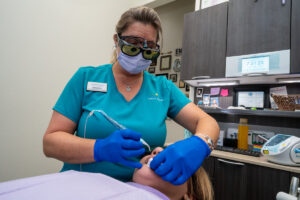
 Laser treatment reduces gum disease in mild to moderate cases without traditional surgery, but severe periodontal disease still requires more extensive intervention. Lasers remove infected tissue and bacteria while promoting healing with less discomfort and faster recovery than conventional surgical methods.
When gum disease develops between your teeth and gums, bacteria accumulate and cause infection. At Olympia Hills Family Dental, we refer advanced gum-related procedures to periodontists who determine the best treatment approach for your specific condition.
Understanding Gum Disease
Healthy gums fit snugly around your teeth, creating a shallow space of 1-3 millimeters. When bacteria and plaque accumulate along the gum line, they cause inflammation and infection. The gums pull away from the teeth, creating deeper pockets where more bacteria gather.
These pockets become difficult to clean with regular brushing and flossing. Once they deepen beyond 4 millimeters, professional treatment becomes necessary to prevent bone loss and tooth loss. The depth of your gum pockets determines which treatment approach will work best.
How Laser Treatment Works
Laser therapy targets infected gum tissue and bacteria within periodontal pockets. The concentrated light energy removes diseased tissue while leaving healthy tissue intact. This precision allows for more conservative treatment compared to traditional surgical methods.
The laser also kills bacteria deep within the pockets and stimulates bone and tissue regeneration. Patients experience less bleeding, swelling, and discomfort during and after laser treatment. The procedure requires less anesthesia than conventional surgery.
Benefits of Laser Gum Treatment
Laser therapy offers several advantages for treating gum disease. The minimally invasive nature means less cutting and stitching compared to traditional gum surgery. Recovery time is shorter, allowing you to return to normal activities more quickly.
The laser’s sterilizing effect reduces the risk of infection after treatment. Patients report less pain and discomfort during the healing process. The precision of laser technology also preserves healthier gum tissue.
Limitations of Laser Treatment
Laser therapy works well for mild to moderate gum disease, but severe cases still require traditional surgical intervention. Deep pockets exceeding 6-7 millimeters or significant bone loss need more extensive treatment. Your periodontist evaluates your specific condition to determine if laser treatment alone addresses your needs.
Some insurance plans don’t cover laser gum treatment, or they only cover it under certain conditions. The cost runs higher than traditional cleaning methods, though the benefits outweigh the investment for most patients.
Alternative and Complementary Treatments
Scaling and root planing remains a common first-line treatment for gum disease. This deep cleaning removes plaque and tartar from below the gum line and smooths the tooth roots. Your dentist or hygienist uses specialized instruments to clean deep within the gum pockets.
Antimicrobial treatments complement laser therapy or scaling and root planing. Medicated mouth rinses, antibiotic gels, or oral antibiotics help control bacteria and promote healing. Some patients benefit from a combination of treatments for optimal results.
Preventing Gum Disease
Good oral hygiene forms the foundation of gum health. Brush twice daily with proper technique, paying attention to the gum line. Floss daily to remove plaque from between teeth where your toothbrush can’t reach.
Regular preventative dentistry visits allow early detection of gum problems. Professional cleanings remove hardened plaque and tartar buildup, contributing to gum pocket formation. Your dental team provides personalized guidance on improving your home care routine.
Signs You Need Treatment
Several warning signs indicate developing gum problems. Red, swollen, or bleeding gums suggest inflammation and infection. Persistent bad breath or a bad taste in your mouth signals bacteria accumulation in gum pockets.
Receding gums make your teeth look longer and expose more of the tooth surface. Loose teeth or changes in your bite indicate advanced gum disease affecting the supporting bone. If you notice any of these symptoms, schedule an evaluation promptly.
What to Expect During Treatment
Your periodontist first examines your gums and measures pocket depths around each tooth. X-rays assess bone levels. Based on these findings, they recommend the most appropriate treatment approach.
If laser treatment is suitable, the procedure happens in the office with local anesthesia. Treatment time varies depending on how many teeth need attention. Patients experience minimal discomfort during the procedure and resume normal activities the same day.
Maintaining Results After Treatment
Following treatment, maintaining your results requires commitment to excellent oral hygiene. Your periodontist provides specific instructions for caring for your gums during healing. Continue regular dental visits for monitoring and professional cleanings.
Some patients need maintenance cleanings more frequently than twice yearly. Your dental team determines the best schedule based on your individual needs and response to treatment.
Protect Your Gum Health at Olympia Hills Family Dental
Dr. Hafen and his team at Olympia Hills Family Dental prioritize your gum health as part of comprehensive dental care. While we refer advanced periodontal procedures to specialists, we work closely with periodontists to coordinate your treatment and monitor your ongoing oral health. We receive about 60 new patients each month from referrals alone and are committed to making every dental visit an enjoyable experience.
Contact us today to schedule an examination if you’re concerned about gum health. Our team evaluates your gums, provides preventive care, and connects you with trusted periodontal specialists when needed.