
Teeth grinding can strain your jaw muscles, trigger headaches, and even change the shape of your jawline over time. The constant pressure from clenching and grinding wears on the muscles and joints in your jaw, and the strain builds up long before most people notice a problem. Many people only catch on once they wake up with a sore jaw, a dull headache, or a face already feeling tired before the day starts.
At Olympia Hills Family Dental, we see this pattern often, especially in patients who did not realize grinding was behind their jaw discomfort. If your jaw feels tight, sore, or sensitive when you wake up, our TMJ treatment team can help you find out why and what to do about it.
How Does Teeth Grinding Affect Your Jaw Muscles Over Time?
Every time you grind or clench, the muscles around your jaw work overtime. A 2025 study on jaw pain and bruxism found a clear link between grinding and pain in the masseter muscle, the temporal muscle, and the jaw joint itself. Researchers also noted this discomfort often spreads beyond the jaw itself, reaching toward the temples and ears, which is why jaw grinding can feel like it affects your whole head rather than just your mouth.
This ongoing strain is why so many people with a grinding habit wake up with sore jaw muscles or notice tenderness when they chew. Left unaddressed, the tension can spread toward your temples, ears, and neck. A small nighttime habit can turn into a source of daily discomfort following you well past breakfast.
Can Teeth Grinding Change the Shape of Your Face?
Yes, and the change often shows up in the muscles rather than the bones. Constant clenching builds up the masseter muscle at the corner of your jaw, which can make your jawline look wider or more square over time. This happens because your body responds to repeated stress the same way any muscle grows when it is used constantly. Nightly grinding gives your jaw a workout it never requested.
Uneven grinding patterns can also pull your jaw slightly out of alignment, which can create subtle asymmetry in how your face looks or moves. If you have noticed a change in your jawline or facial symmetry, our dentists can check whether grinding is behind it and recommend a plan to protect your jaw going forward.
What Are the Signs of Nighttime Teeth Grinding?
Most people don’t know they grind their teeth until they notice the signs, including:
- Morning headaches: a dull ache in your temples or jaw first thing in the morning
- Worn teeth: flattened, chipped, or shortened edges on your teeth
- Jaw clicking: popping, clicking, or a tight feeling when you open your mouth
- Tooth sensitivity: teeth feeling more sensitive to hot or cold than usual
- Nighttime noise: a partner or family member mentioning grinding sounds while you sleep
If several of these sound familiar, it is worth having your jaw evaluated before the strain adds up further. Grinding can also change how your teeth look over time, which we cover in our guide on how teeth grinding affects your smile’s appearance.
How Can You Protect Your Jaw and Face From Teeth Grinding?
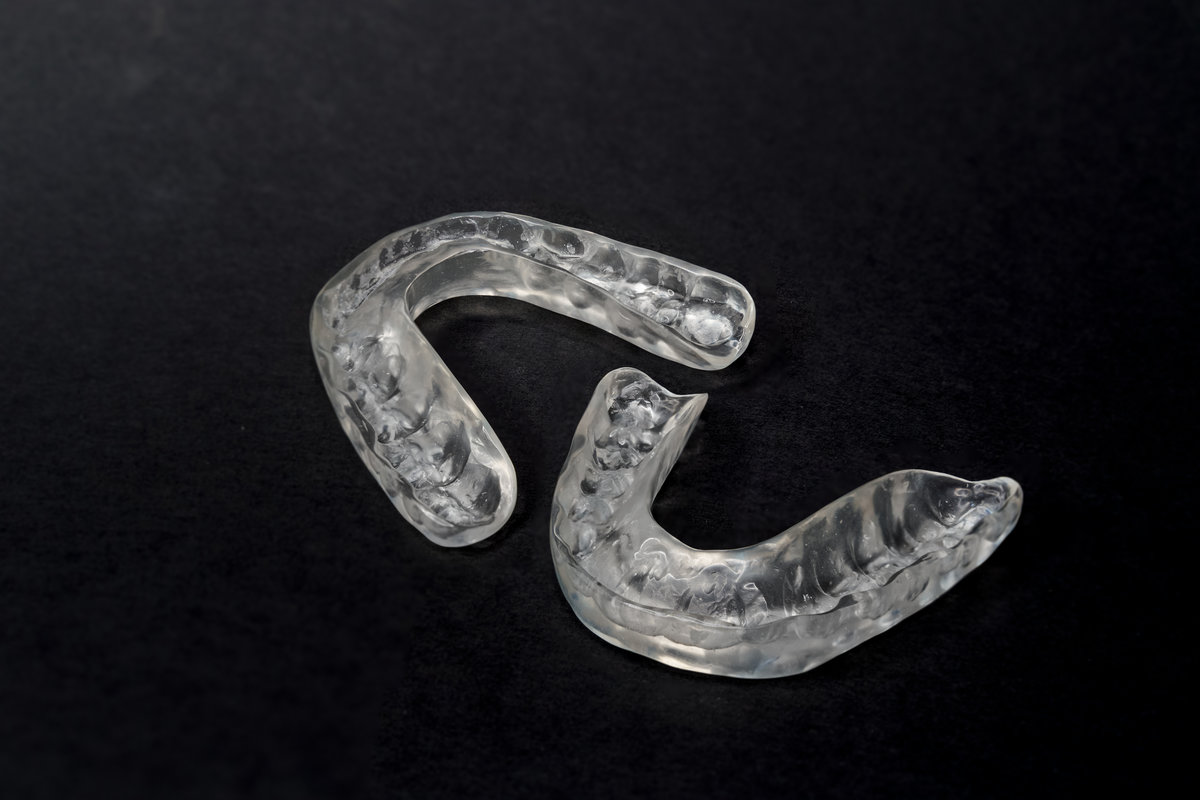
The most effective way to protect your jaw is to stop the grinding from doing damage while you sleep. A custom nightguard creates a cushion between your upper and lower teeth, which takes pressure off your jaw muscles and joint every single night and gives those overworked muscles a real chance to rest.
If grinding has already led to jaw pain, we start by evaluating your bite alignment and your sleep health. Grinding and clenching can connect to how your teeth fit together and how well you breathe at night, so we look for what is driving the habit. A nightguard protects your teeth and jaw while we find the answer. We also hold off on crowns for patients who clench or grind until the root cause of the grinding is resolved. Zirconia is hard, so a crown placed too soon can wear down your remaining natural teeth.
Protect Your Jaw and Face at Olympia Hills Family Dental
Teeth grinding often goes unnoticed until your jaw, face, or teeth start to show the effects, but catching it early makes a real difference in how much strain your jaw takes on. At Olympia Hills Family Dental, our team takes the time to look past your teeth and consider your whole bite, jaw, and facial health, using custom nightguards and a focused TMJ treatment approach built around what your jaw actually needs.
Our team welcomes patients throughout Schertz, Cibolo, Converse, and the surrounding communities who want real answers about jaw pain, headaches, or changes in their bite. Contact us today to schedule an evaluation and find the right plan to protect your jaw and face.
