
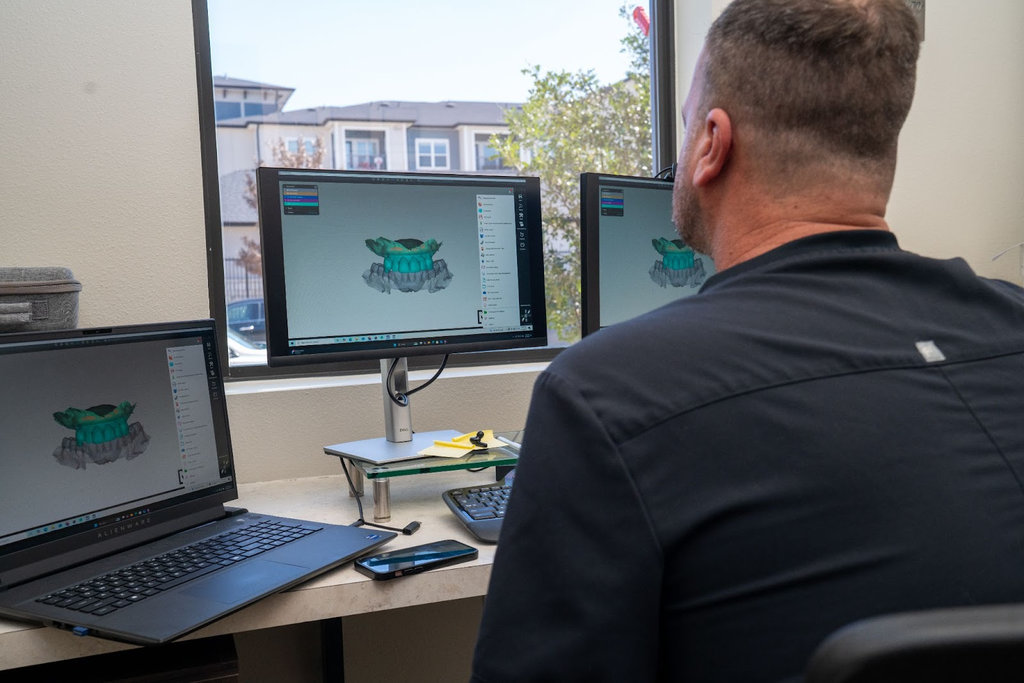
 A missing tooth changes more than how your smile looks in photos. It can change how you chew, which side of your mouth you favor, how certain words sound, and, over time, the shape of the bone and gums around the gap. Dental implants address both sides of the problem: the visible tooth and the root support underneath it. This post looks at what an implant actually changes in daily life and what determines how natural the final result looks.
Dr. Jerame Hafen and the Olympia Hills Family Dental team place and restore dental implants in our office, from a single missing tooth to full-mouth restorations. Dr. Hafen also teaches other dentists how to place and restore implants. Whether you’re missing one tooth or several, our focus is on careful planning and comfort so your result looks and functions as naturally as possible.
What Changes When You Lose a Tooth
When a tooth is lost, the bone that held its root is no longer stimulated by chewing, and it gradually shrinks. Neighboring teeth can drift or tip into the space, and the opposing tooth can over-erupt toward the gap. These changes can alter your bite and make the area harder to restore the longer it is left.
Many people also start chewing on one side to protect the gap, which places extra load on the remaining teeth. If the missing tooth is near the front, it can affect how you pronounce some sounds and how comfortable you feel smiling. Replacing the tooth sooner rather than later usually gives you more options.
How Implants Restore Chewing and Speech
Dental implants replace the root as well as the crown. Once the implant bonds with the jawbone, it gives the new tooth a fixed foundation, so you can bite and chew without the movement that can come with removable options. Unlike dentures or bridges, implants integrate with your jawbone, creating a stable foundation for your new tooth.
Here is how an implant typically helps with daily function:
- Stable chewing: A fixed implant crown lets you chew on both sides again, which spreads the load across your bite.
- Clearer speech: Restoring a missing front tooth, or securing teeth that move, can help with sounds that depend on tongue and tooth contact.
- Bone support: Because the implant sits in the jaw, it helps preserve the bone that would otherwise shrink after tooth loss.
- Protection for neighboring teeth: A single implant does not require reshaping the teeth next to it, unlike a traditional bridge.
- Familiar home care: You brush and floss around an implant much as you would a natural tooth, along with regular checkups and professional cleanings.
Dental implants restore your ability to enjoy everyday meals and conversation without working around a gap.
What Makes an Implant Look Natural
How natural an implant looks depends on more than the crown itself. The amount of bone and the health and thickness of the gum tissue around the implant shape the gum line, and that matters most for front teeth, where the gum line shows when you smile. If bone has been lost, a graft may be recommended to rebuild support so the gums can frame the new tooth properly.
The crown is custom-made to match the shade, shape, and translucency of your neighboring teeth. Careful implant positioning, planned with x-rays and 3D imaging, helps the crown emerge from the gums the way a natural tooth does. Healthy gums also matter long term: keeping plaque under control helps prevent inflammation around the implant, which can affect both its appearance and its stability.
The Dental Implant Process: What to Expect
Getting dental implants is a step-by-step process designed to ensure the best outcome for your smile. We take the time to make sure every phase is comfortable and effective.
- Consultation and planning: We begin with a thorough exam, imaging, and health history, and discuss your goals to determine if implants are right for you.
- Removal of the existing tooth and bone grafting, if needed: In most cases, the damaged tooth is still present and requires removal prior to implant placement. If infection or bone loss has affected the area, Dr. Hafen may place a bone graft to provide a sturdy foundation for your future implant.
- Implant placement: A small titanium post is placed in your jawbone, serving as the foundation for your new tooth.
- Healing and integration: Over a few months, the implant bonds with your bone, creating a strong, stable base.
- Custom restoration: A lifelike crown is placed on top of the implant, completing your smile with a natural look and feel.
For a closer look at the healing phase, see what to expect in the first week after implant surgery.
Is an Implant the Right Fit for You?
An implant is not the only way to replace a tooth, and it is not the right choice for everyone. If the teeth next to your gap already need crowns, or if a health condition makes surgery less advisable, a bridge may serve you better. Our guide on when to choose a dental implant over a bridge walks through that decision.
If you wear a lower denture that moves when you eat or speak, a small number of implants can help hold it in place. Our post on mini implants for loose lower dentures explains when narrower implants may be considered and what their limits are.
Why Choose Olympia Hills Family Dental for Your Dental Implants?
You deserve a team that prioritizes precision, comfort, and long-term success. At Olympia Hills Family Dental, we combine careful planning with a patient-first approach to create the best possible outcome for your smile.
Dr. Hafen places and restores implants in our office and teaches other dentists how to place and restore implants. We use modern technology to improve accuracy and make your procedure as comfortable as possible. We also take the time to answer your questions, address your concerns, and craft a treatment plan tailored to your needs.
Dental anxiety stops many people from receiving the care they need. If you are nervous about treatment, talk openly with Dr. Hafen about your concerns. Sedation options, including IV sedation, are available to help you stay comfortable during the procedure.
Missing teeth do not have to hold you back. Schedule a consultation with Dr. Jerame Hafen at Olympia Hills Family Dental by visiting our contact form.
Frequently Asked Questions About Dental Implants and Your Smile
Will a dental implant look like my natural teeth?
An implant crown is custom-made to match the color and shape of your neighboring teeth. How natural it looks also depends on the bone and gum tissue around the implant, which is why planning and, in some cases, grafting matter, especially for front teeth.
Can I eat normally with a dental implant?
Once the implant has healed and the final crown is placed, most people can return to a normal diet and chew on both sides. During healing, you will follow a soft food diet so the implant can bond with the bone.
Does a missing tooth affect speech?
It can, particularly when a front tooth is missing or when teeth or dentures move. Replacing the tooth with a stable restoration can help with sounds that depend on contact between the tongue and teeth.
Do dental implants need special care?
Implants are cleaned much like natural teeth, with brushing, flossing, and regular checkups and cleanings. Good home care helps prevent gum inflammation around the implant, which can threaten its long-term stability.
How long does the implant process take?
For many patients the full process takes several months, because the implant needs time to bond with the bone before the final crown is placed. Extractions or bone grafts can add time, and Dr. Hafen will give you a personalized timeline.
