 Solea Sleep laser treatment can reduce snoring for many people without surgery, incisions, or a machine at night, but it is a snoring treatment, not a treatment for sleep apnea. The procedure uses a CO2 laser to gently heat and tighten the soft palate, the tissue at the back of the roof of the mouth that often vibrates and makes the snoring sound. Whether it is the right choice depends first on finding out why you snore, because loud snoring can be a sign of obstructive sleep apnea, a medical condition that needs a physician’s diagnosis and its own treatment plan.
At Olympia Hills Family Dental, Dr. Christina Gonzalez has extensive training in sleep breathing disorders and provides Solea Sleep treatment in our office. This post explains what the treatment can and cannot do, who is likely to benefit, and why screening comes first.
Snoring or Sleep Apnea? Why the Difference Matters
Snoring happens when air moving through a partly narrowed airway makes relaxed tissue vibrate. Snoring without other breathing problems is called primary snoring. It can disturb a bed partner and your own sleep, but it is not the same as sleep apnea.
Obstructive sleep apnea is different. The airway repeatedly narrows or closes during sleep, breathing pauses or becomes shallow, and oxygen levels can drop. Most people with sleep apnea snore, but many people who snore do not have sleep apnea. Untreated sleep apnea is linked with high blood pressure, heart disease, stroke, and daytime sleepiness, which is why it should not be treated as a noise problem.
Warning signs that point toward sleep apnea rather than simple snoring include pauses in breathing or gasping that a partner notices, waking up unrefreshed, morning headaches, and feeling sleepy during the day even after a full night in bed. The American Academy of Sleep Medicine advises that people with these signs be evaluated for a sleep disorder rather than simply treated for snoring. If your screening suggests sleep apnea, we will refer you to a physician for diagnosis and discuss how dental sleep treatment may fit into the plan your doctor recommends.
How Solea Sleep Laser Treatment Works
The Solea Sleep protocol targets the soft palate, the tissue that most often vibrates during snoring. The laser treatment delivers controlled, non-cutting thermal energy that is intended to tighten and stiffen this tissue so it vibrates less as air passes over it, while keeping its normal function for swallowing and speaking.
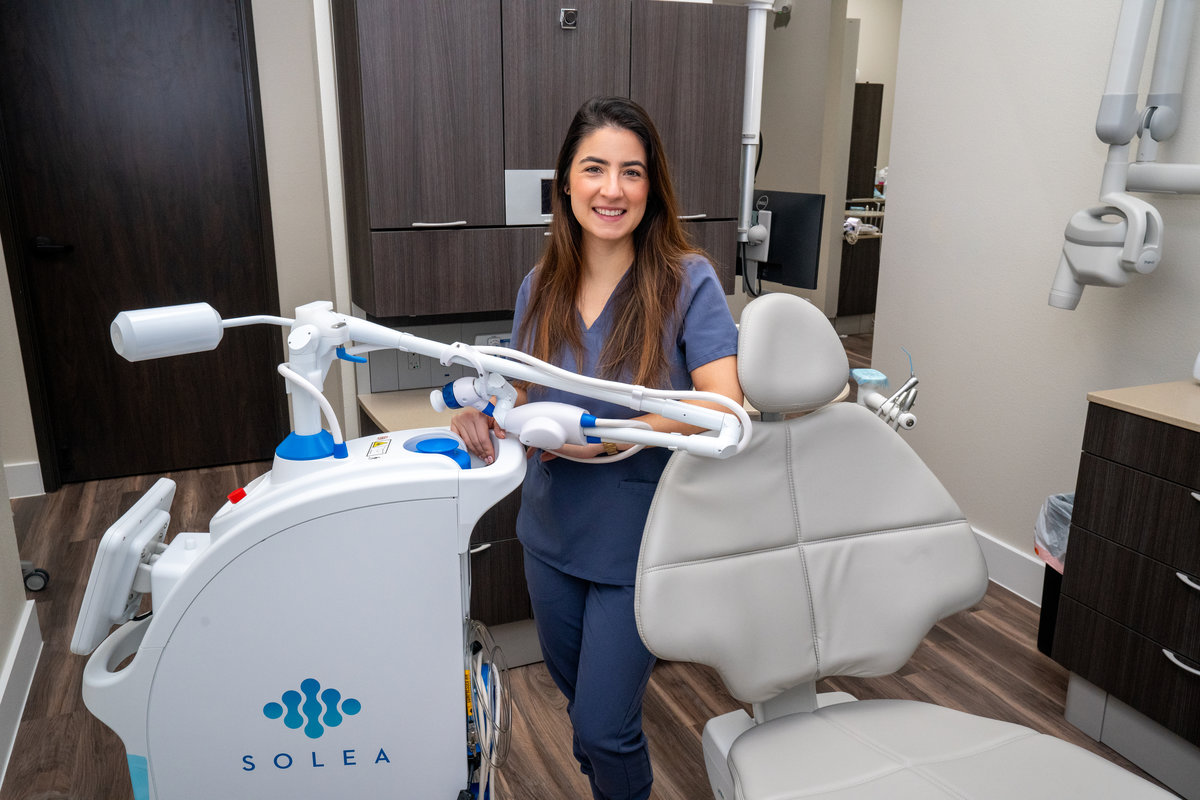
Dr. Gonzalez performs the procedure in our office. There are no incisions or sutures, no hospital stay, and no general anesthesia. Treatment is delivered in two sessions spaced about 28 days apart, which gives the tissue time to respond between visits. Many people return to normal activities, including eating and drinking, the same day, and some notice mild throat sensitivity that usually resolves quickly.
Solea is a CO2 dental laser cleared by the FDA for soft-tissue procedures. Research specific to the snoring protocol is still limited. The mechanism has been studied in laboratory and animal research showing that the laser can stiffen soft palate tissue, and much of the reported benefit in people comes from the manufacturer and from treating offices rather than from large controlled trials. That is one more reason we set realistic expectations and check your sleep first.
What Results Are Realistic
Many people who are good candidates report quieter or less frequent snoring after completing both sessions, with improvement continuing over the following weeks as the tissue responds. Bed partners are often the first to notice. Results vary from person to person, and they may fade over time, so some patients choose occasional maintenance treatments.
Weight gain, alcohol close to bedtime, nasal congestion, and sleeping on your back can all make snoring worse and can affect how well any snoring treatment works. We will talk through those factors with you, because small changes in habits often add to the benefit of treatment.
It is just as important to know what Solea Sleep does not do. It is not a substitute for CPAP or another prescribed therapy if you have been diagnosed with moderate or severe sleep apnea, and it should not be used to quiet snoring while an untreated breathing disorder continues underneath. Our post on alternatives to a CPAP machine covers the options that may be discussed when sleep apnea is part of the picture.
Comparing Your Options for Snoring
People who snore usually weigh a few paths. Nasal strips and positional changes are inexpensive and help some people, though they often give partial relief. Custom oral appliances that hold the lower jaw slightly forward can reduce snoring and are also used for some cases of sleep apnea, but they need to be worn every night. CPAP is the most established treatment for sleep apnea, and while many people adapt to it, others find the mask and nightly routine hard to keep up. Surgery on the palate or airway is more invasive and involves a longer recovery.
Solea Sleep fills a different niche. For primary snoring caused by soft palate vibration, it offers an in-office option with no device to wear and little downtime. Our posts on how laser snoring treatment works and what to expect at your first laser snoring session walk through the visit itself.
Who Is a Good Candidate for Solea Sleep
Solea Sleep tends to work best when the soft palate is the main source of the noise. You may be a good candidate if you experience the following:
- Snoring that worsens when sleeping on your back
- Increased snoring with alcohol consumption
- Partial or no relief from nasal strips, positional therapy, or oral appliances
- Loud, consistent snoring that disrupts household sleep
- A screening or sleep study that shows snoring without significant sleep apnea
People with significantly enlarged tonsils, severe nasal obstruction, or diagnosed moderate to severe sleep apnea usually need other treatment first. Before recommending Solea Sleep, Dr. Gonzalez prefers to start with an at-home sleep study, reviews your symptoms and health history, and discusses all of the options that fit your situation.
Experience Sleep Treatment at Olympia Hills Family Dental
Dr. Gonzalez has extensive training in sleep breathing disorders and is committed to helping our patients get a better night’s sleep. Our team understands how snoring affects both your rest and the people around you, and we take the time to make sure the treatment matches the cause.
We serve patients throughout Live Oak, Universal City, New Braunfels, and the surrounding areas who are looking for answers about snoring and sleep. You can learn more about Dr. Gonzalez and her training, or contact us today to schedule a sleep consultation and find out whether Solea Sleep laser treatment is a good fit for you.
Frequently Asked Questions About Solea Sleep Laser Treatment
Does Solea Sleep treat sleep apnea?
No. Solea Sleep is used to reduce snoring caused by soft palate vibration. Sleep apnea is a medical condition that needs a physician’s diagnosis and a treatment plan such as CPAP or another prescribed therapy.
Do I need a sleep study before laser snoring treatment?
We prefer to start with an at-home sleep study. Because snoring can be a sign of sleep apnea, screening helps make sure the treatment matches the cause. If results suggest sleep apnea, we refer you to a physician.
How many Solea Sleep sessions will I need?
The standard protocol is two sessions spaced about 28 days apart. Results vary, and some people choose occasional maintenance treatments later if snoring returns.
Is Solea Sleep painful?
Most people describe little discomfort. There are no incisions or sutures, and you can usually eat, drink, and return to normal activities the same day. Mild throat sensitivity can occur and usually resolves quickly.
Is snoring always a sign of sleep apnea?
No. Many people snore without sleep apnea. Pauses in breathing, gasping, morning headaches, and daytime sleepiness are signs that you should be evaluated for a sleep disorder.
