
If you have been unhappy with the appearance of your teeth for some time, chances are the issue has crossed your mind more than once. Staining that has not responded to whitening, a chipped edge that catches your eye every time you smile, gaps, or irregular surfaces can all affect how you feel about your appearance. Dental veneers offer a reliable, natural-looking way to address these concerns in a predictable and lasting way.
What Are Dental Veneers?
Dental veneers are thin shells of porcelain, each custom-crafted to fit over the front surface of a specific tooth. Because they are designed to match the natural shape, size, and shade of your surrounding teeth, well-placed veneers are nearly indistinguishable from natural enamel. They are used to improve the appearance of teeth that are stained, chipped, slightly misaligned, worn, or irregularly shaped, making them one of the most versatile options in cosmetic dentistry.
Unlike some cosmetic treatments, veneers also address minor structural concerns. A chipped or fractured surface that has been bothering you for years can be covered and stabilized, improving both how it looks and how it feels when you bite.
The Dental Veneer Process: What to Expect
Step 1: Consultation and Candidacy Evaluation
The process begins with a consultation. Your dentist will review your dental history, examine your teeth, and discuss your goals for your smile. Veneers are best suited for teeth with intact underlying structure. Patients with active gum disease, extensive decay, or more significant structural damage may be guided toward other restorative options first. The consultation confirms that veneers are the right solution for your situation and opens a conversation about the range of shades, shapes, and sizes available.
Step 2: Tooth Preparation and Impressions
Once you and your dentist have agreed on the treatment plan, the preparation appointment is scheduled. Your dentist removes a thin layer of enamel from the front surface of each tooth receiving a veneer. This step creates room for the veneer so that it does not look or feel bulky when placed. The amount removed is minimal, but it does mean the prepared teeth will always need a veneer or other restoration going forward.
After preparation, dental impressions are taken and sent to a laboratory where your custom veneers are fabricated. Your dentist also takes impressions of how your teeth bite together to ensure the veneers work correctly within your bite. Temporary veneers are placed to protect the prepared surfaces and give you a preview of the final result while you wait, typically one to two weeks.
Step 3: Shade Selection
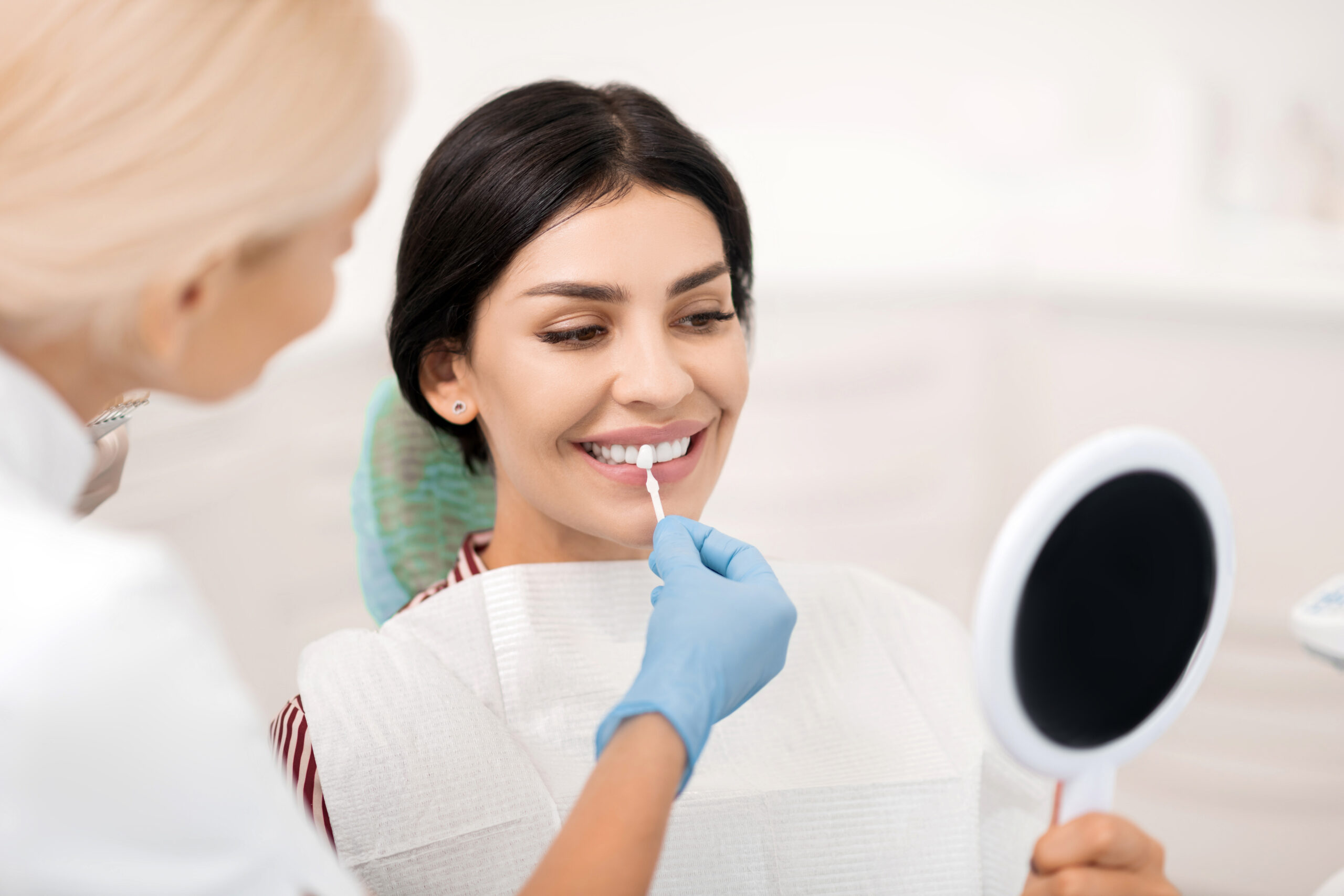
Choosing the right shade is an important part of the process. The goal is a result that enhances your smile while complementing your overall appearance, particularly your skin tone. While many patients want a noticeably brighter smile, a shade that looks natural in the context of your full appearance tends to produce a more satisfying long-term result than a dramatic contrast. Your dentist guides you through the options and helps you find the shade that works best.
Step 4: Bonding the Permanent Veneers
When your permanent veneers are ready, you return for the placement appointment. Your dentist holds each veneer against the prepared tooth to check fit, color, and contour, making any minor adjustments needed before bonding. The tooth surface is cleaned and treated to create a textured surface for improved adhesion. Dental cement is applied to the back of each veneer and the shell is placed onto the tooth. A curing light hardens the cement quickly. Excess cement is removed, and your bite is checked to confirm everything is aligned correctly.
Caring for Your Veneers
Porcelain veneers are durable, but they require the same care you would give your natural teeth. Brush twice daily with a non-abrasive toothpaste and a soft-bristled toothbrush. Floss daily. Avoid biting into hard objects, using your teeth to tear non-food items, or chewing ice. Veneers resist staining better than natural enamel, but consistent oral hygiene keeps both the veneers and the surrounding gum tissue healthy for years to come.
With proper care, porcelain veneers can last ten years or longer, making them a durable and rewarding investment in your smile.
Olympia Hills Family Dental evaluates every patient individually to determine whether veneers are the right solution and to create a result that looks and functions naturally. Schedule a consultation today to find out what is possible for your smile.
Frequently Asked Questions About Dental Veneers
Are dental veneers permanent?
Because a thin layer of enamel is removed from each tooth during preparation, porcelain veneers are considered an irreversible treatment. The prepared teeth will always need a veneer or other restoration to protect them. The veneers themselves are not permanent in the sense that they will eventually need to be replaced, typically after ten years or more with proper care.
Do dental veneers look natural?
Yes. Porcelain veneers are designed to closely mimic the translucency and texture of natural tooth enamel. When shade, shape, and size are chosen thoughtfully to complement your overall appearance, the result looks natural and balanced rather than artificial. Your dentist works with you throughout the process to ensure the final result meets your expectations.
How many appointments does the veneer process take?
The full process typically involves two to three appointments: an initial consultation, a preparation appointment where impressions are taken and temporary veneers are placed, and a final bonding appointment when the permanent veneers are cemented. The wait between preparation and bonding is usually one to two weeks while the laboratory fabricates your custom veneers.
What cosmetic issues can dental veneers fix?
Dental veneers are commonly used to address teeth that are stained or discolored and have not responded to whitening, chipped or fractured, slightly misaligned or irregular in shape, worn down, or have small gaps between them. They are primarily a cosmetic solution but can also cover minor structural imperfections on the visible surface of the tooth.
How do I care for my veneers after placement?
Caring for veneers is similar to caring for natural teeth. Brush twice daily with a non-abrasive toothpaste and a soft-bristled toothbrush, floss daily, and attend regular dental checkups. Avoid biting into very hard foods, chewing ice, or using your teeth to open packaging. If you grind your teeth at night, a protective night guard helps preserve the veneers over time.